Did a new Florida law expand roof-age insurance protections to condos and HOAs on July 1? If you have spent any time this year in a Palmira or Pelican Landing Facebook group, at a Renaissance Center pool chair, or on the phone with a well-meaning insurance blog, you have probably heard yes. You would be repeating something that isn't true.
Senate Bill 808 and its identical House companion, HB 815, would have done exactly that. They would have widened Florida's roof-age insurance protections beyond standard homeowner policies to cover condo associations and other residential property owners, and they would have added roof consultants and registered roof observers to the list of inspectors insurers must accept. Both bills died in committee on March 13, 2026. They never reached a floor vote. They are not law.
That matters right now in a very specific way for anyone selling a home in a Bonita Springs golf community built in the late 1990s or early 2000s, where original roofs are sitting exactly in the age window where an insurer starts asking questions.
What the law actually says today
Strip away the 2026 legislative session and you are left with the rule that has governed roof age and insurance since Florida's 2022 and 2023 reform packages: Florida Statute 627.7011. It says an insurer cannot refuse to issue or refuse to renew a homeowner's policy solely because a roof is less than 15 years old. Once a roof crosses 15, the insurer can require an inspection, but if an authorized inspector certifies at least 5 more years of useful life, the carrier has to keep offering coverage.
The rule about who counts as an "authorized inspector" already changed once, in July 2024, when House Bill 1611 added licensed roofing contractors to that list. That is a real, currently operative change. The 2026 attempt to widen the statute further to explicitly cover condo and HOA-governed buildings is the one that stalled out in the Banking and Insurance Subcommittee.
Citizens Property Insurance, the state's insurer of last resort, publishes its own thresholds separately from the statute. According to its own FAQ, updated in March 2026, Citizens requires documentation of full roof replacement once a shingle or "other" roof passes 25 years, or once a tile, slate, clay, concrete, or metal roof passes 50 years. Many private carriers apply stricter internal cutoffs, often somewhere between 15 and 20 years, regardless of what the roof is made of. The 15-year statutory floor still applies to those private carriers too. They just have more room to ask for paperwork above it.
Why this lands differently in a Palmira or Pelican Landing resale
Palmira Golf and Country Club began development in 2001 and now has around 800 residences spread across 13 neighborhoods. Pelican Landing traces back to 1985 with the creation of Pelican's Nest Golf Club, and its later condo phases, including The Tides, were completed in 2004. Spanish Wells, Bonita Bay, West Bay Club, and Shadow Wood at The Brooks all sit in a similar band of construction dates.
That means a meaningful share of the resale inventory in these communities carries an original roof from somewhere between the early 1990s and mid 2000s. Do the arithmetic against today's date and a lot of those original roofs are 20 to 25 years old, some older. Exactly the age where a listing agent, a buyer's lender, or an anxious seller starts Googling roof-age insurance rules and lands on a blog written for a different state's legislative session, or one that got 2026 wrong.
Here is the pattern I keep seeing in listing remarks across these communities: roofs replaced in 2017, 2018, 2019, 2020, on homes built between 2001 and 2004. That is a tile roof coming out at 13 to 19 years old, well inside a structural lifespan that can run to 30 or even 50 years for concrete or clay tile. Some of those replacements were genuinely due to storm damage or condition. Others look like preemptive moves made because a seller assumed insurance would force the issue anyway.
The material advantage nobody prices into a listing
This is the part that gets lost in the noise. Citizens' own published gap between a 25-year cap on shingle and a 50-year cap on tile is not a rounding error. It is the difference between a roof that becomes a paperwork conversation in year 15 and one that can, with a passing inspection, keep running for decades past that.
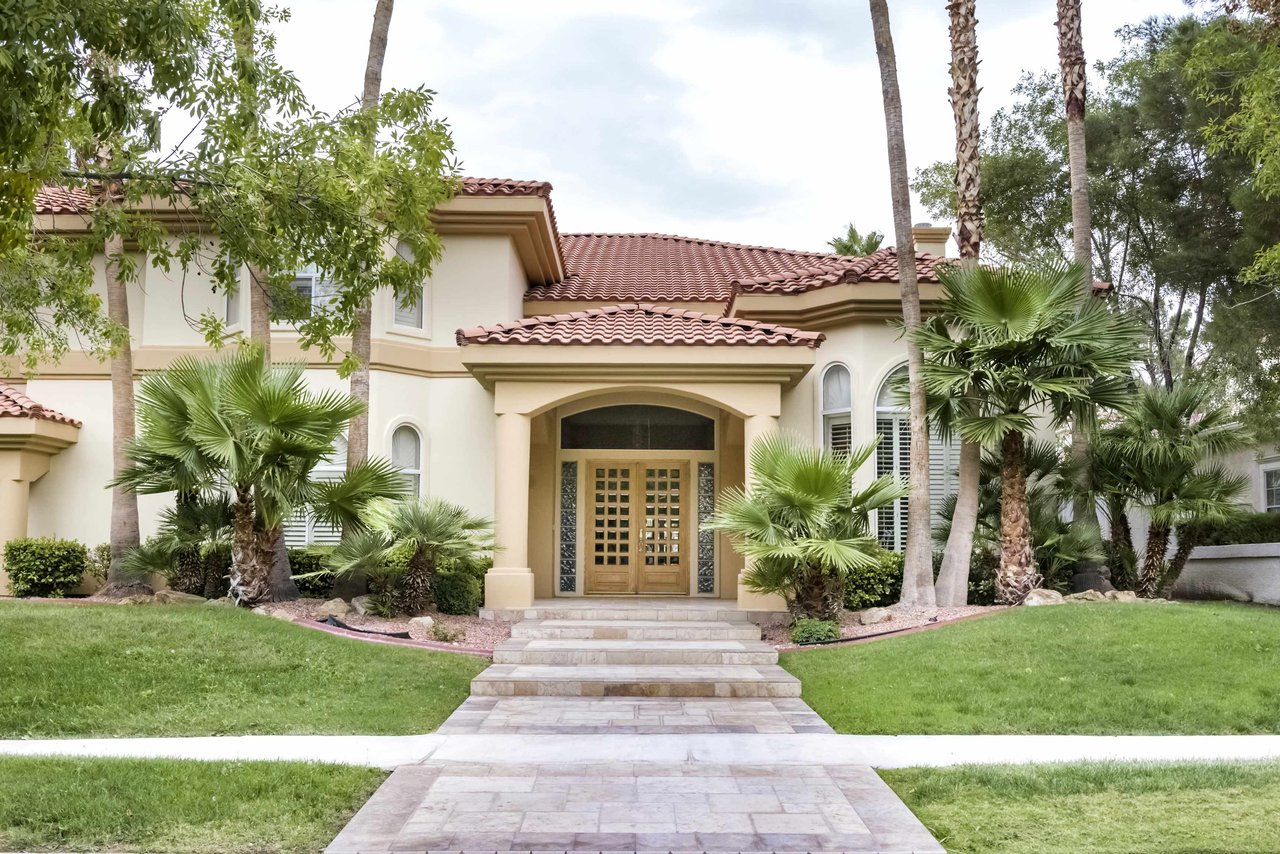
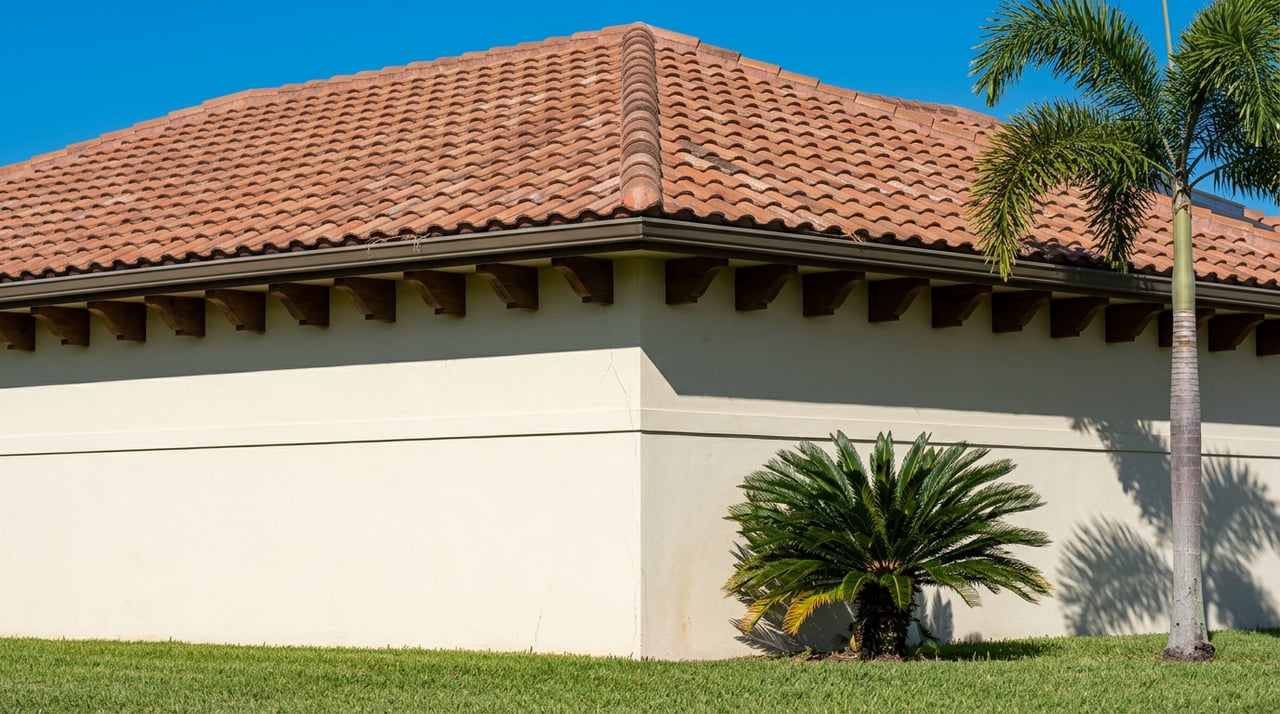
Most of Palmira's and Pelican Landing's higher-end product, the estate homes, coach homes, and villas built around barrel tile roofs, sit on the favorable side of that line. A tile roof from 2003 that is now 23 years old is not automatically a replacement candidate under either the statute or Citizens' own stated threshold. It is a candidate for a roof condition inspection, which costs a fraction of a full tear-off and reroof.
A standard four-point inspection in South Florida runs roughly $125 to $250, sometimes less depending on the inspector and whether it is bundled with a wind mitigation report. A full tile reroof on an estate home can run tens of thousands of dollars. The gap between those two numbers is the whole argument for getting the inspection before assuming the replacement.
What roof age looks like against today's insurance market
None of this happens in a vacuum. Citizens Property Insurance started 2026 with roughly 541,000 fewer policies than it had a year earlier, a drop driven by the state's depopulation program moving policyholders back into a stabilizing private market following the 2022 and 2023 reform packages. Citizens also filed for an average rate cut in the range of 8.7 to 8.8 percent for personal lines effective at Spring and summer 2026 renewals, its first rate decrease in roughly a decade.
That is genuinely good news, but it is not evenly distributed. Whether a given Southwest Florida carrier will write a policy still comes down to roof age, construction type, claims history, and proximity to water on that specific address. A softening statewide market does not mean every 24-year-old shingle roof in Lee County gets a free pass. It means the conversation has shifted from "can I get insured at all" to "which of the roughly 17 carriers that have entered Florida since the reforms will write this specific roof, and on what terms."
What a Bonita Springs seller should actually do before listing
| Roof age | What the law requires | What most carriers actually do |
|---|---|---|
| Under 15 years | Insurer cannot refuse or non-renew solely for age | Standard underwriting, usually no special inspection |
| 15 to 25 years (shingle) | Insurer must accept a passing remaining-useful-life inspection | Many require inspection or certification at renewal |
| 15 to 50 years (tile, metal, slate) | Same statutory floor applies | Citizens' own cap doesn't trigger until year 50; private carriers vary |
| Past 25 years (shingle) | Citizens requires documented replacement | Private options narrow further |
| Past 50 years (tile, metal, slate) | Citizens requires documented replacement | Rare in this market's current housing stock |
Before a Palmira, Pelican Landing, or Spanish Wells listing goes live, the sequence that actually protects a seller's price looks like this:
- Confirm the roof's installed date from permits, not memory. Statute calculates age from the last date 100 percent of the surface was replaced to code, not from a partial repair.
- Order a four-point and wind mitigation inspection before listing, not after a buyer's lender flags it. Under HB 1611, a licensed roofing contractor can perform this, not just a home inspector.
- If the roof is 15 or older, get the remaining-useful-life documentation in hand ahead of a buyer's insurance shopping. That report is the single piece of paper that keeps a deal from stalling at the binding stage.
- Do not assume a tile roof needs replacing on age alone. Check it against Citizens' own 50-year threshold and your specific carrier's underwriting guideline before spending five figures on a reroof the numbers don't support.
Getting this sequence backward, replacing first and asking questions later, is the single most avoidable cost I see sellers absorb in this part of Bonita Springs.
A few questions worth settling before you list
Does a passing four-point inspection guarantee I keep my current insurer? It guarantees the insurer cannot drop you solely for age if the report shows 5 or more years of remaining useful life. It does not override other underwriting reasons, like active leaks or storm damage.
Is the rule different for condos and HOA buildings? The 2026 attempt to explicitly extend these protections to condo and HOA-governed residential property is the part that died in committee. Confirm with the association and its carrier what policy type applies to a specific building.
Should I replace a 20-year-old tile roof before listing in Palmira or Pelican Landing? Not automatically. Get the inspection first. Tile's structural lifespan and Citizens' own published cap both run well past 20 years, and the inspection costs a fraction of a reroof.
Roof age used to be a simple number on a listing sheet. In this market, it is a negotiation between a statute, a carrier's internal guideline, and whatever a homeowner read online this year. Getting the sequence right, inspection before assumption, is the difference between a smooth closing and a deal that stalls at the buyer's insurance-binding stage.
If you are weighing a sale in Palmira, Pelican Landing, Spanish Wells, or anywhere else in Bonita Springs and want a straight read on what your roof's age actually means for pricing and insurability, Beach to Bunker Properties can walk the specifics with you. Start with a free Instant Property Valuation and we'll talk through what the current insurance landscape means for your particular listing before it ever hits the market.